
Safety coach
Drive safer and pay less for insurance
Volvo’s heritage is safety. In the digital era, that means helping people understand and improve how they drive, before anything goes wrong.
I led this multi-platform product (mobile & car) end to end, from early desirability research, partner evaluation, implementation, and the roadmap beyond it.
My role
Founding designer
Expertise
0 to 1 product, Product strategy, UX/UI
Year
2022-26
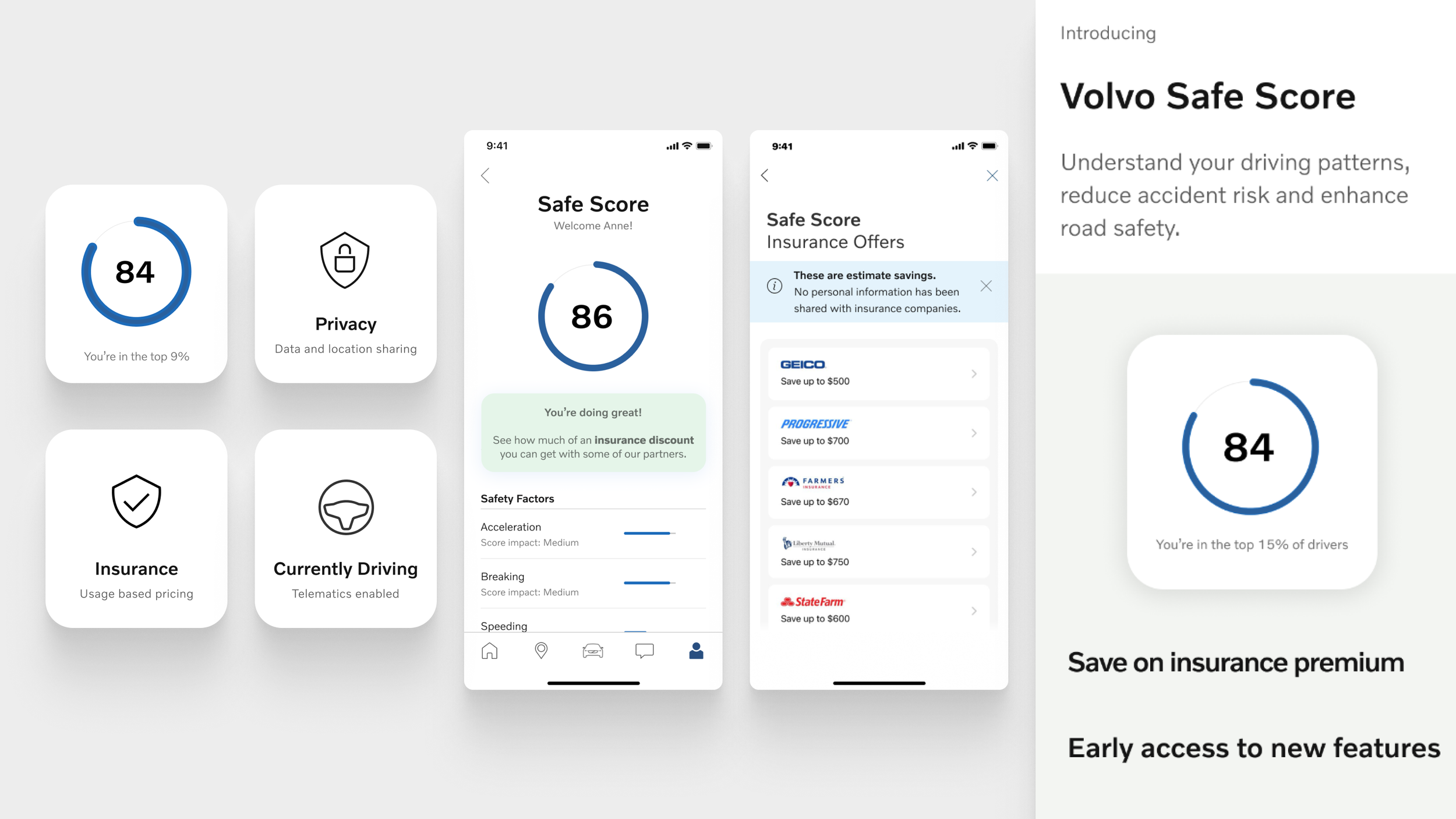
But, I already drive safe
This is just one of the many highlights I learned from working with researchers early on, to understand if our customers find this feature valuable, and if there’s any concerns to adopt it.
Drivers are also motivated differently. Insurance discount could be a good external motivation for some, while others could be motivated by learning about their own driving patterns.
The learnings, such as being transparent about data handling, has guided us through many details in implementation and roadmap prioritization later on.
Clarify the doubts
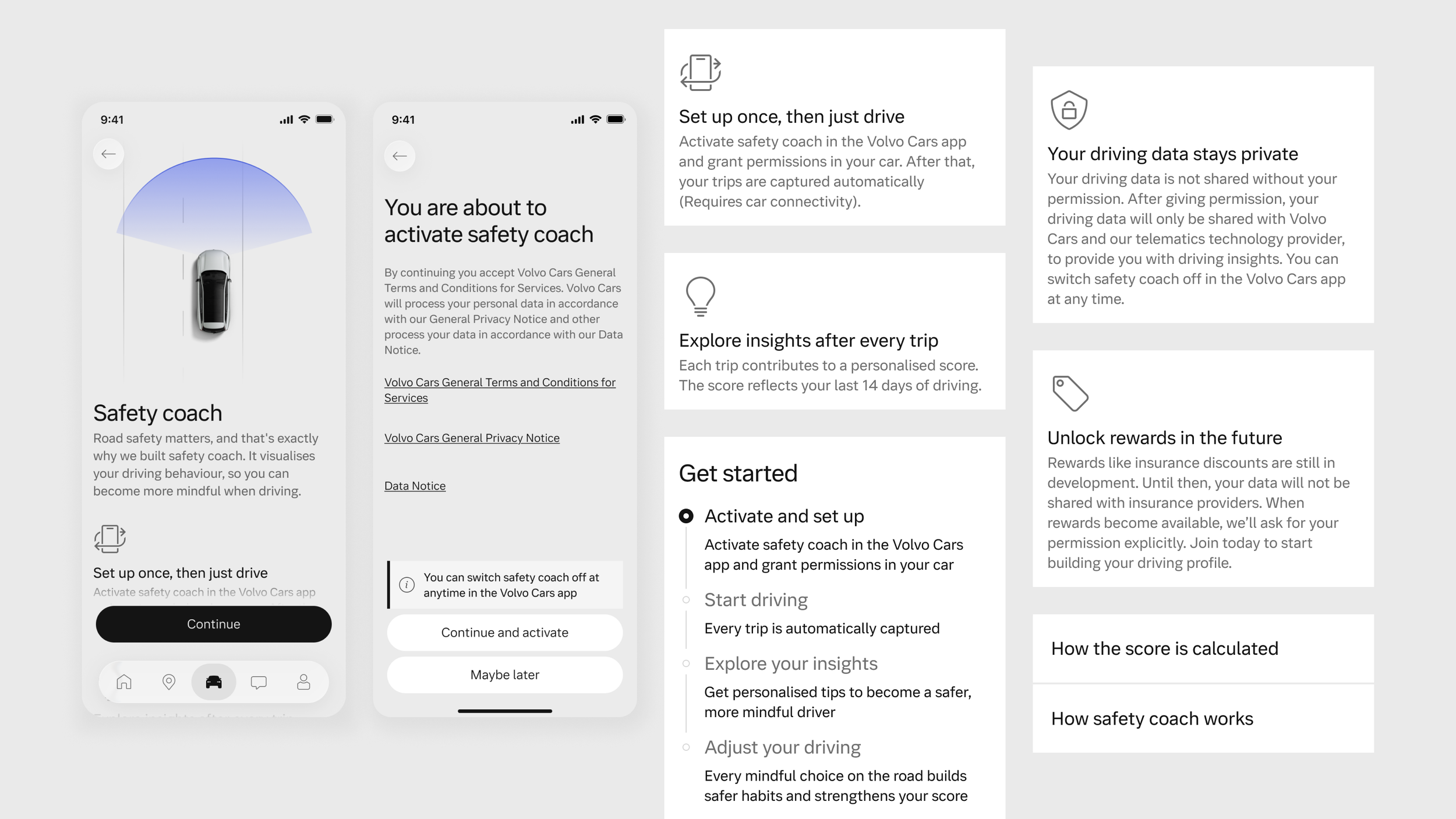
When drivers first see the offer, I clarify three major concerns: the hurdle to join is low, their data privacy is protected, and there’s no negative impact on insurance. Consent is upfront and separate, not buried in terms.
For customers who want to learn more about the product, there are separate sections to cover topics such as score mechanics and edge cases, like per-driver vs. per-car tracking.
The result: 24% customers who see the offer joined, double the industry benchmark ~10%.
Onboard with ease
The experience is shaped heavily by technical constraints, since there is an in-car app serving as the data pipeline. Customers have to do context switching, and there is a waiting gap.
I drafted multiple iterations to make onboarding as seamless as possible, including different login methods for in-car app, notifying customers when the in-car app is ready to setup etc.
Drive and learn
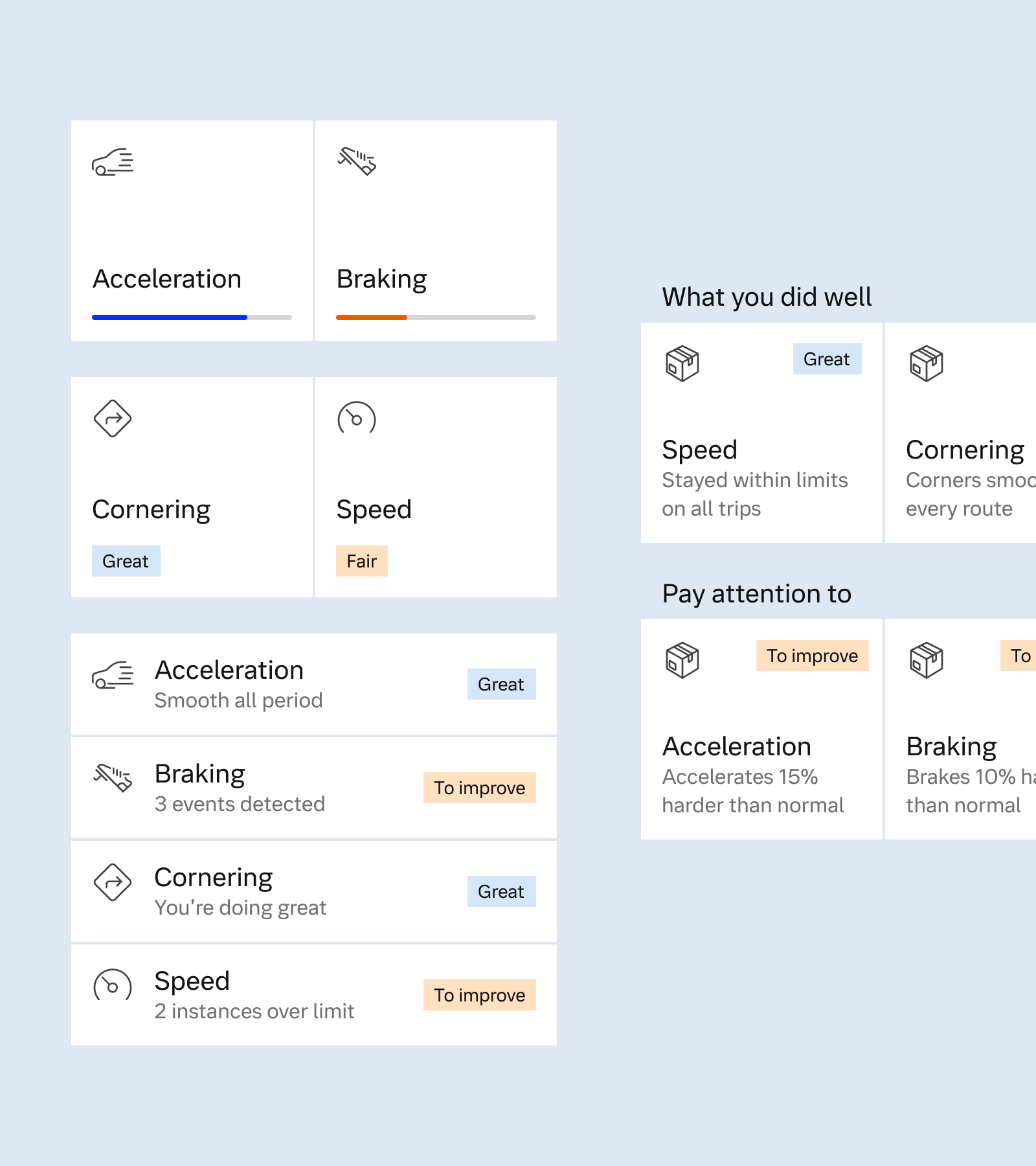
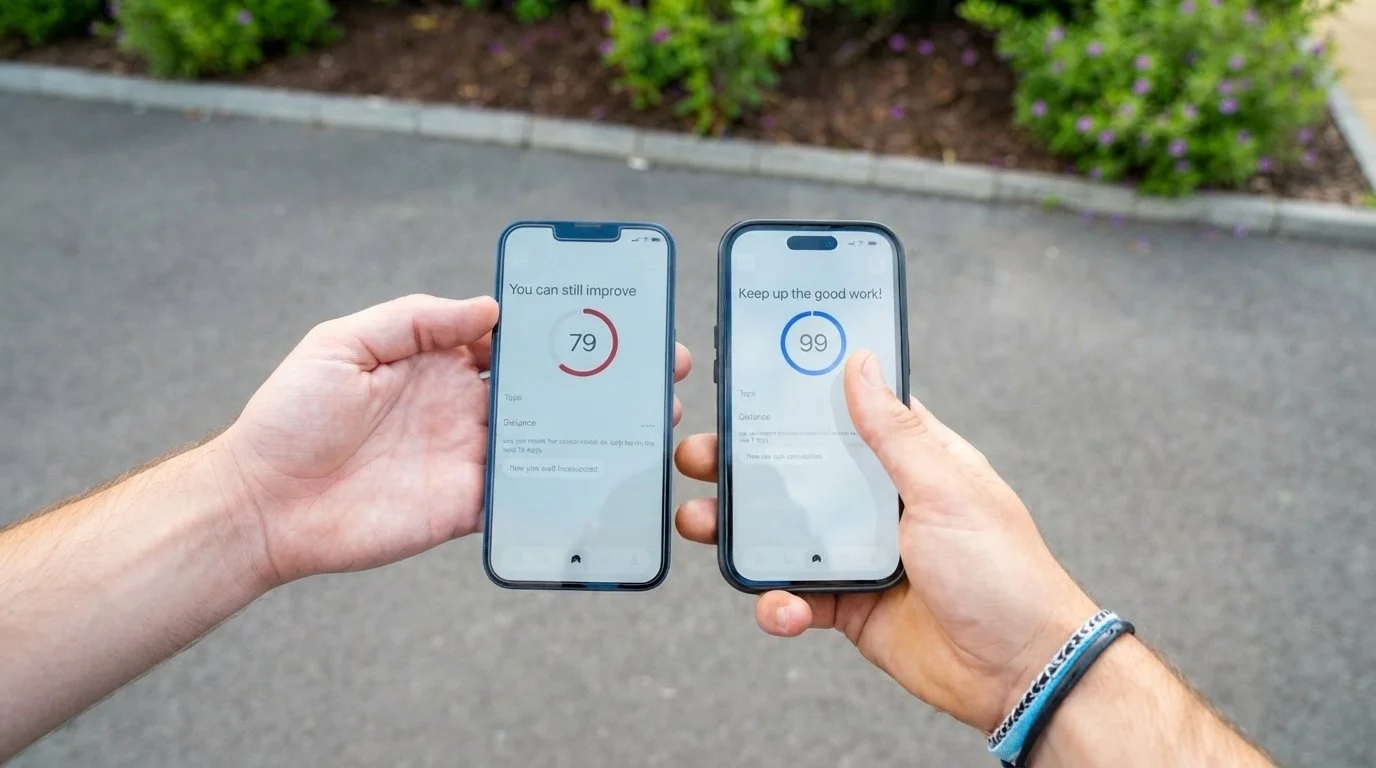
Drivers need more info to trust the score they get. Thus, we linked the score into four areas of actionable behavior. I drafted multiple directions to visualize the data, and picked the one that’s clear, useful and fits into technical constraints.
I directed the in-car screens with our telematics partner CMT, to keep the score states aligned with mobile.
The result: We’ve built a weekly habit for drivers to come back and learn about how they drive.
Moving forward
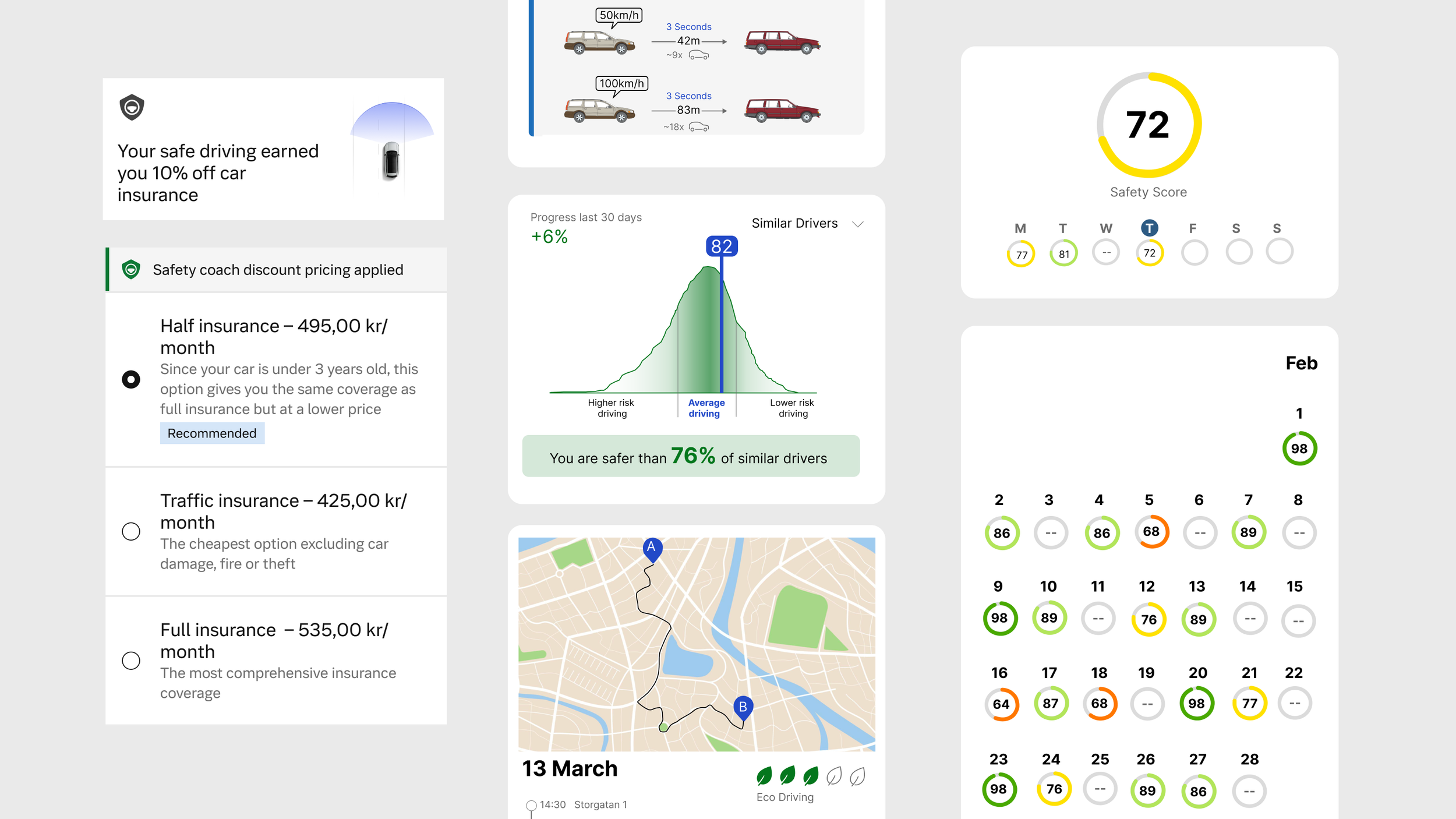
The natural next step is to reward the safe drivers. I drafted out the experience to guide conversations with our insurance partners, so to keep stakeholders aligned with where we are heading towards.
I've also directed next gen safety coach concepts with two thesis students, pressure tested what's worth building before any reaches implementation.
Impact
24% take rate: More than double the ~10% industry benchmark
Weekly habit: Drivers come back 4.3 days out of every 28. It’s ahead of majority features in the Volvo Cars app
Building safety coach wasn’t a linear story. We once changed our partner to gain global coverage, and that led to a new, multi-step onboarding flow. My role as a designer is to bring clarity of any experience trade-offs to product and engineering, and continuously holding the standard.